

The story of the flashback in Sorocaba
From the traditional clubs to the age of ballads
Sorocaba always had a special relationship with music. Since the old radios AM that packed afternoons in the city until the dances that filled clubs and gymnasiums, the music was always present in the day-to-day of the sorocabano. And when we talk about flashback, that story is even richer, going through generations and leaving memories that to this day thrill those who lived every moment.
🎧 LISTEN TO FLASHBACK NOWThe 1970s: the golden age of clubs
In the 1970s, 1980s and 1990s, Sorocaba lived in the golden age of social clubs. O Sorocaba Club, officially founded on November 9, 1926, was one of the city's main meeting points. Located in Plaza da Matriz (present-day Colonel Fernando Prestes square), the club promoted memorable dances that attracted hundreds of people.
Next door, the Club Recreational Union It was also part of the city's nightscape. As a result of the merger of various associations, the Union offered sophisticated dances that brought together the high society of Sorocabana. In the mid-1970s, the club expanded its activities with the delivery of a country headquarters in Jardim Guadalajara, taking the fun beyond the center.
O Club Road, former Sorocabana Football Club Iron Road, founded by railways, keeps its nightclubs active to this day on Álvaro Soares street. His secretary, José Carlos Meloni de Campos, the coat of arms, recalls: "It was chic and really nice to be a club partner". Associates counted on swimming pools, gaming rooms and football fields, besides, of course, the memorable dances that went through decades.
The list of events was extensive: Debutants' Ball, Mother's Ball, Rose Ball, Spring Ball, Red and Black Ball, Hallelujah's Ball, City Ball, Formation Ball, Hawaii Ball and Ball. For those who liked to shuffle the skeleton, the city offered a vast musical programme from Monday to Monday.
"The list of dances was extensive in the 1970s, 1980s and 1990s, considered golden seasons of Sorocaba clubs."
The end of the 1970s: the first DJs
In the late 1970s, while traditional clubs still dominated the scene, a new generation began to take an interest in the magic of record players. One of the names that marked this transition was Sylvio "Dumato" Müller. Still in 1978, he already stood out acting on several hints from the interior, especially in Sorocaba, in the Scarpa Club, where he practiced sports and spent most of his childhood.
Attention to radio programming such as Diffusora, World and Excelsior, which blended rock and soul, Dumato was influenced by great names such as Frank Zappa, James Brown, Kraftwerk, Bob Marley, Pink Floyd and throughout the funk, soul, disc and rock generation. It was there, on Sorocaba tracks, that he began to build a career that would later lead him to become one of the most respected DJs in the country.
The '80s: the explosion of discos
The '80s brought a revolution on the Sorocabana night. The discos gained strength and a particular name stood out: Zarabatana. It was there that Sylvio Dumato, already a resident of the house, was discovered by Tony Lovato, a renowned FM Disco Show professional. Lovato witnessed one night in Zarabatana and was so impressed that he took Dumato to São Paulo, where he met Machado, DJ and businessman of the night of São Paulo.
Machado was the main supplier of music for the main radios and nightclubs in the country. With this connection, Dumato soon moved to the capital and quickly settled among the best professionals in the arts and record companies. In 1984, he was invited by Julio Mazzei to do live mixing at Radio Pool FM, a radio station that brought together great DJs in the early 1980s.
But Sorocaba's night scene was still pulsating. The city discos attracted young people from all regions, and local DJs began to gain prominence. The sound was dominated by the italo house, synth-pop and the first hits of what would be called flashback.
The 1990s: Factory Music and the Age of Ballads
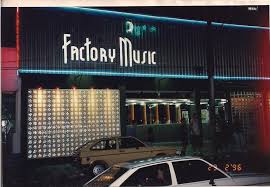
If there's a name that marked the Sorocabana night in the '90s, that name is Factory Music. Until 2001, the ballad was the main name of the city's night scene and was even frequented by several Brazilian celebrities.
The site's founder, Sérgio Guariglia, Krika, tells us that the club came from his passion for parties and music. By the time he was 12, he'd already do a couple of garage babies and birthdays for friends. At 18, he began professionally as a DJ and was soon hired to work in a nightclub.
In 1992, Krika invested in the opening of a place for young people and thus emerged Factory Music, located on Rua da Penha, in the Center. The name came from a factory sign in front of the building you rented. A friend, an English teacher, suggested Factory Music — And so it was.
Factory pioneered in many ways. The sound and light system was ahead of time for the time. The house was the first in town to adopt the flyers system for disclosure — today, these flyers are items for collectors and are sold at high prices at the Barganha Fair. Even the dress of the security guards was striking, to the point of being called "Robocop of Factory".
"There's sorocabana night before and after Factory. She pioneered having screens, a differentiated marketing system and, of course, a lot of respect and cordiality in the service."
The domingueiras that marked generation
One of the most striking phenomena of the 1990s in Sorocaba was the domingueiras from Factory Music. Matinees on Sundays attracted teenagers from all over the city. Karen Parada, journalist and frequenter of the time, says that from 13 to 17 years old, between 1996 and 2000, domingueira na Factory was sacred.
Karen was a promoter and distributed at the mall and at school the cards that guarantee a discount at the entrance. At the age of 17, she performed a show on the extinct Metropolitan TV, where she interviewed several celebrities who attended the house, including Fernanda Paes Leme and Roger Gobeth.
"Facty changed my life. It's impossible to remember this phase of my life without missing a point. It was a light time, full of energy, loud music and fast heart. Sometimes I have dreams at night as if I were there, dancing with the 'gallera do passinho'."
Factory sound: italo house and flashback
DJ César Barbosa was one of the main reasons for consolidating the name of Factory Music. Krika's friend since before the opening of the house, Caesar began in sound and lighting and soon became DJ and host of events. He recalls the repertoire of the time: " At that time the ‘strong’ was the italo house. We liked to play very commercial things, a 'chickleton' even, which stuck to people's heads".
Giant events were those that brought international attractions and theme parties on Sundays. There was the night of the foam, the night of the nut and the screw — where the men received a screw and the women a pig and, during the night, had to find which fit with which. The Boy and Girl Factory contest stopped the city, gathering a crowd of young people to find out who the new face of the place would be.
The '80s and '90s rock in Sorocaba
While Factory dominated the dance scene, rock also had its guaranteed space in Sorocaba. Alternative and independent bands flourished in the city. In the 1980s, Vzyadoq Moe, the first band in the municipality to gain national recognition, with an article in Bizz magazine that declared: "an unpronounceable sound for an impressive sound".
Back in the '90s, bands like Wry and The Biggs, who brought new breath to the scene and put Sorocaba for good on the map of Brazilian independent music. Many of these bands became major influences for the next generation of indie groups, which had names such as Automatic Pilot, The Fortunetellers and Volpina.
Events such as 80’s & 90’s Rock Night They kept the flame of rock alive in the city. In February 2015, Rock Suburbia hosted a two-decade night with the band In the ID (bringing classic rock, grunge and metal from the 1990s) and the band Puzzle (with the best of the 1980s, from pop to hard rock).
The legacy of radios in Sorocaba
Radios have always played a key role in preserving the flashback in Sorocaba. A Radio Sorocaba FM 105.9, founded on November 15, 2012 by musical producer and radio producer Roberto Neander, is dedicated to the successes of the 1970s, 80s, 90s and 2000, with the aim of "rescue the good music" of the past using modern technology.
A ClassFM 80.1, from Radio Vanguarda, also has a programming line dedicated to the best of international flashback and MPB, focused on the adult-contemporary audience.
And, of course, there's the Web Radio Flash Back ZN, based in the North Zone of Sorocaba, focusing on flashback of the 1970s, 80s and 90s, keeping alive the musical tradition that marked generations.
The flashback today: nostalgia that does not pass
The nostalgic feeling of the 1980s and 1990s remains strong in Sorocaba. Proof of this are the thematic parties that gather thousands of people to relive that time. In August 2024, the Villa Plaza Hall He promoted a show with the band Body Electric, making three special sets: the first with songs from The Cult and INXS, the second with Depeche Mode, and the third with the biggest hits of the 1980s and 1990s, including A-ha, Billy Idol, Information Society, The Cure, The Smiths, Soft Cell and U2.
The house, located at 395 São Bernardo do Campo Avenue, has become one of the main meeting points for those who want to relive the magic of the flashback. "For those who are tired of the conventional ballads of São Paulo, it is worth this escape to Sorocaba", highlighted the publication of the Earth.
Journalist Karen Parada, who lived intensely the Factory era, even found love at one of these souvenir parties. In February 2024, he met his current boyfriend, Régis, at a nostalgic event. "Our first contact was at the party WhatsApp group, we met personally there and the rest is history."Tell her.
Conclusion
The history of the flashback in Sorocaba is rich and goes through generations. From the elegant dances in the traditional clubs of the city to the discotheques of the 1980s, from the explosion of Factory Music in the 1990s to the thematic parties that today gather thousands of people, the music that marked the season remains alive in the memory and heart of the sorocabanos.
Clubs such as Sorocaba Club, Recreational Union and Club Estrada were the first stages of this story. Then came the clubs like Zarabatana, which revealed DJs that would become national reference. Factory Music has undoubtedly marked a generation and created a legacy that is still celebrated at nostalgic parties around the city.
And rock, with bands like Vzyadoq Moe, Wry, The Biggs and so many others, showed that Sorocaba was also the cradle of a vibrant alternative scene, which put the city on the map of Brazilian independent music.
Today, local radios keep this flame alive, taking the best of the flashback to the Sorocabano homes. And the theme parties prove that nostalgia is not just a reminder — it is something you live, dance and celebrate, creating new memories for those who lived that time and presenting to the new generations the music that never goes out of fashion.
After all, as DJ César Barbosa rightly said by recalling his years at Factory Music: " Sometimes people send it to us who met their husband/wife at one of our parties. It massages our ego to know that our work has produced fruit in the short and long term. We're very glad we were part of such an incredible generation.".
🎧 LISTEN TO FLASHBACK NOWRadio Fone Music – Preserving the musical memory of Sorocaba and all of Brazil.


